Rabitts, quail, deer, acorns and grasses surrounding a tule marsh. Wheat and fruit trees created a bountiful agricultural industry. This is where it began. A small San Fernando farming village became a rural relationship within a strange urban society, to combine the spirit of the good community with the substance of the great metropolis.
Commercial development grew under the Weddington family with a general store and hotel, and later, a post office, rail depot, school and blacksmith all adding to the farming and fruit orchard community. In 1910, the Bank of Lankershim opened and the Lankershim Businessmen’s Association was formed. Years later, this became what is known as Lankershim Chamber of Commerce.
In 1923 the City Of Los Angeles purchased 99-acre North Hollywood Park for $378,000.
It was the largest greenspace in the Valley at that time.
Today, North Hollywood has less than 1 acre per every 1,000 residents.
To put into persepective -- National Recreation and Parks suggests a
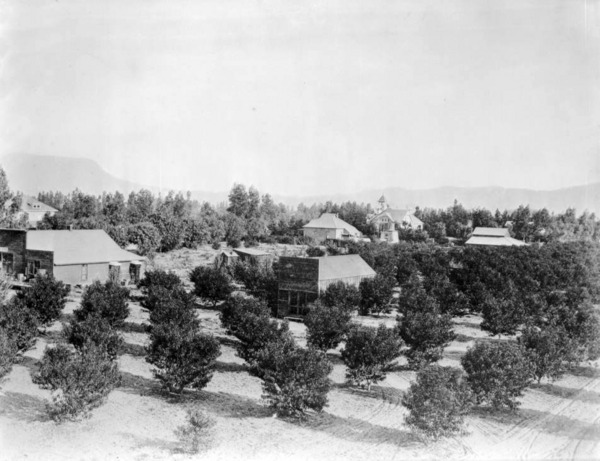
photo courtesy of: USC California Historical Society Collection, 1860-1960
Late 1920's when North Hollywood High opened, The Board of Education was asked to employ teachers who were already residents of North Hollywood, creating jobs and education opportunities right in the area. This was forming a community that supported its residents.
After World War II came post-war suburbia and major growth. The area’s rapid growth caused a housing shortage (a real housing shortage; not like what LA believes to be a housing shortage today), but soon the demand led to a construction boom, transforming the valley from a predominately agricultural area into a sprawling suburban community.
In the 1930's, the people of Los Angeles were shaping the city as they went along. It was realized they had desired the size but not the character of a modern metropolis. They feared that as the price of progress their adopted community would lose its sense of fellow feeling & lower its standards of personal morality. Los Angeles emerged as one of the largest agglomerations in the United States-the people strove to recreate the cohesive communal life of their former farms & towns. They longed to perpetuate familiar rural relationships within a strange urban society, to combine the spirit of the good community with the substance of the great metropolis.
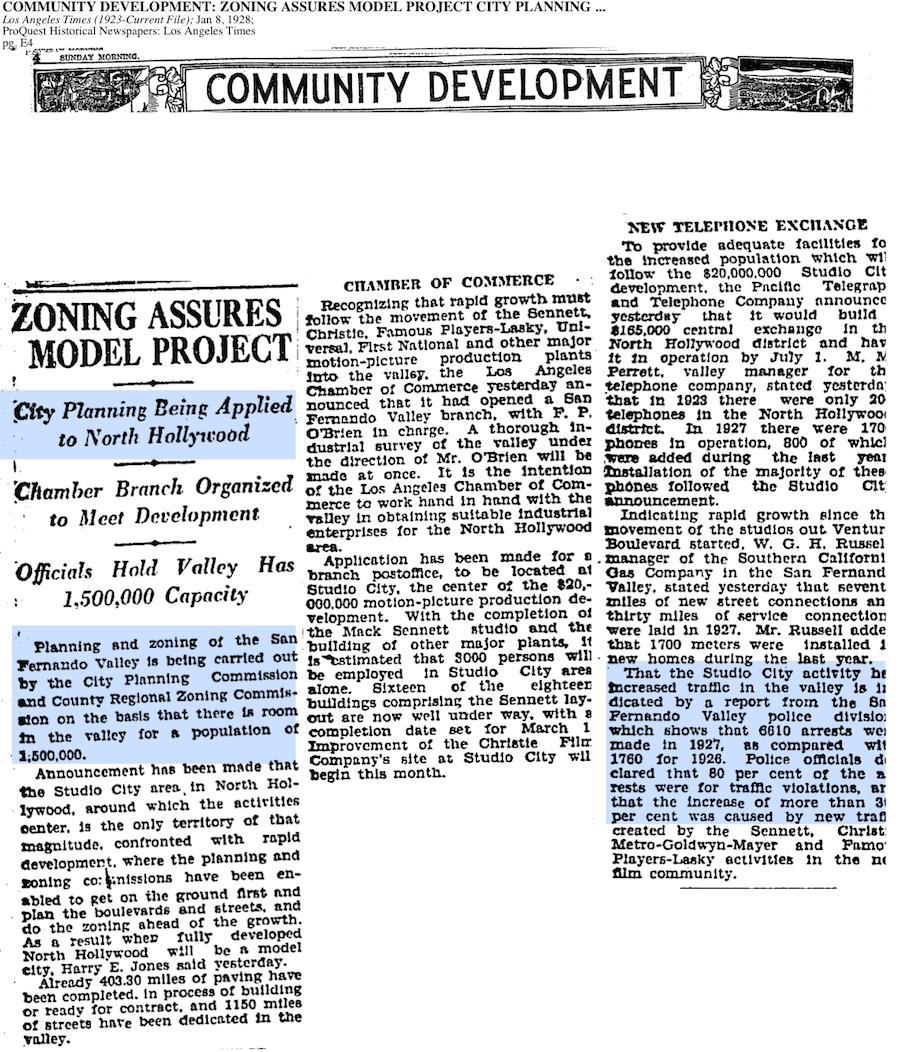
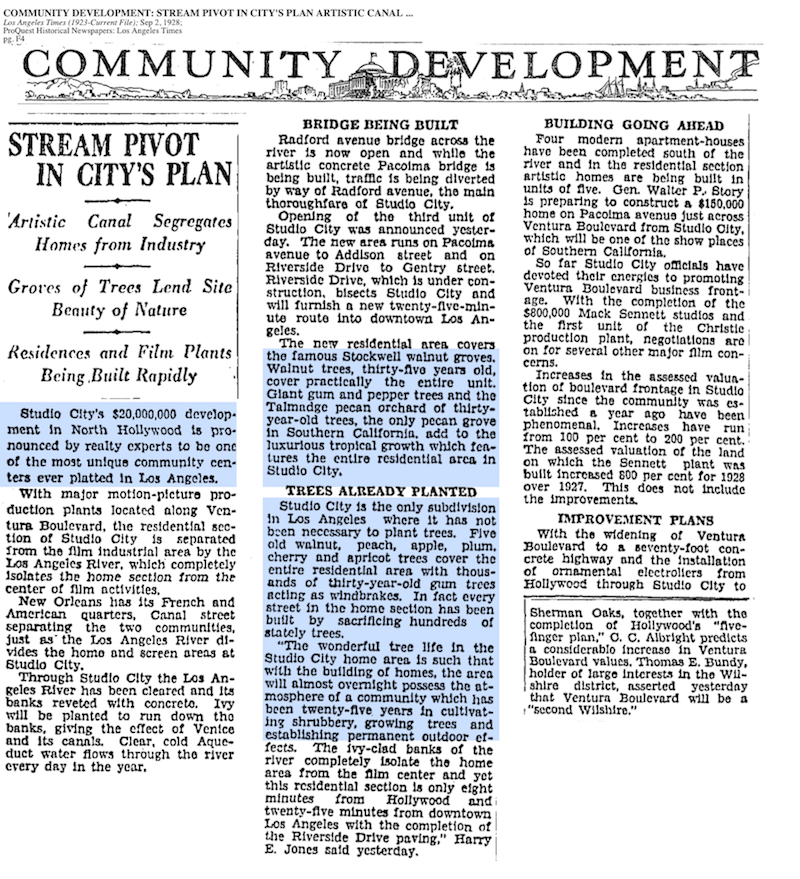
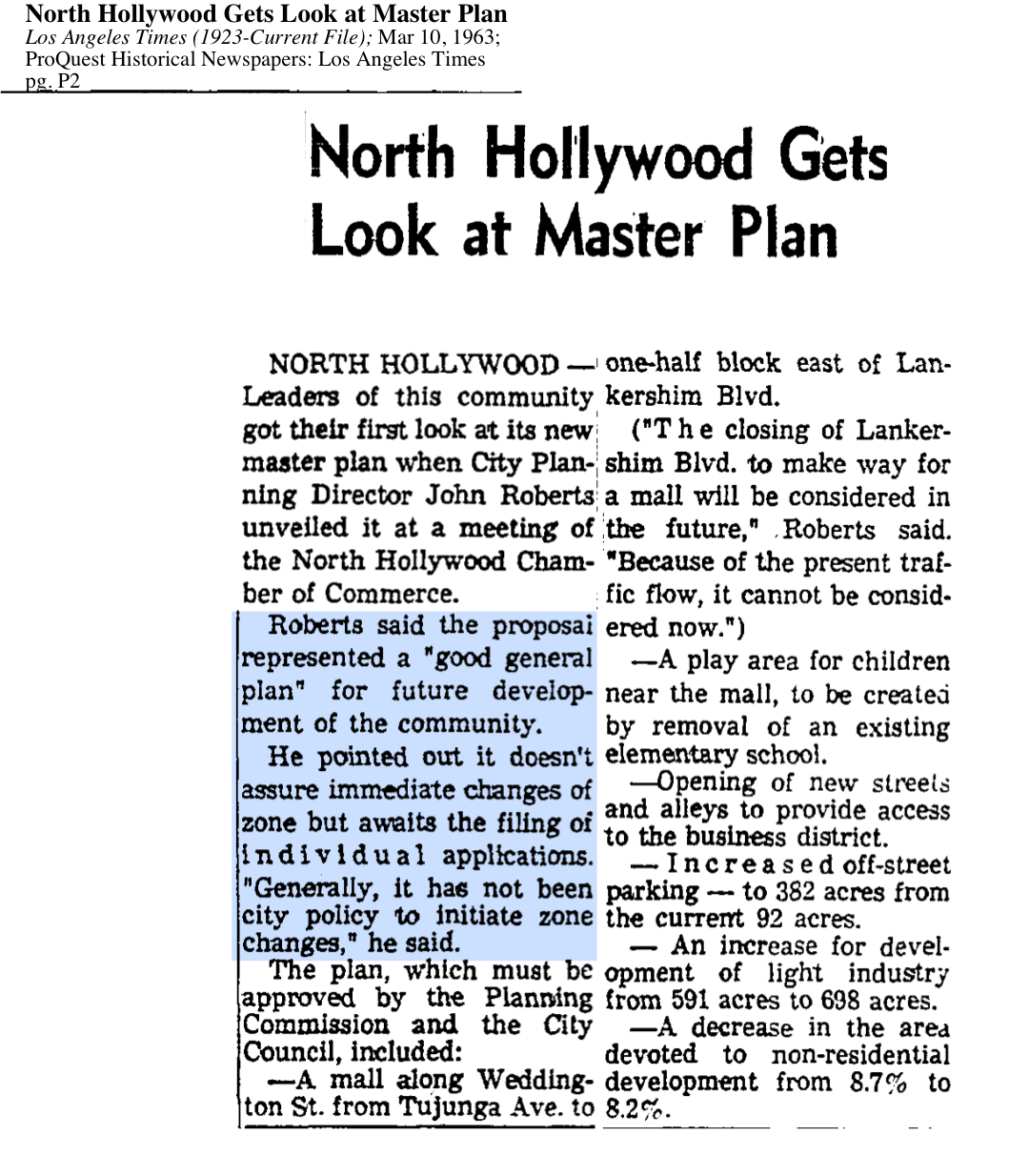
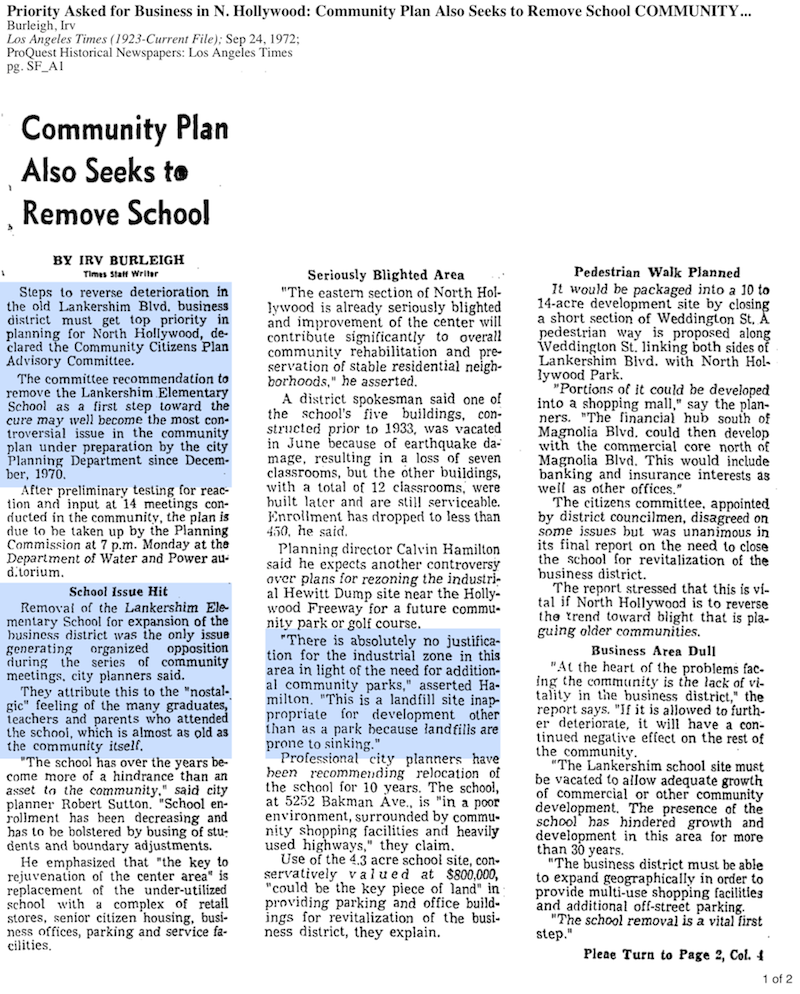
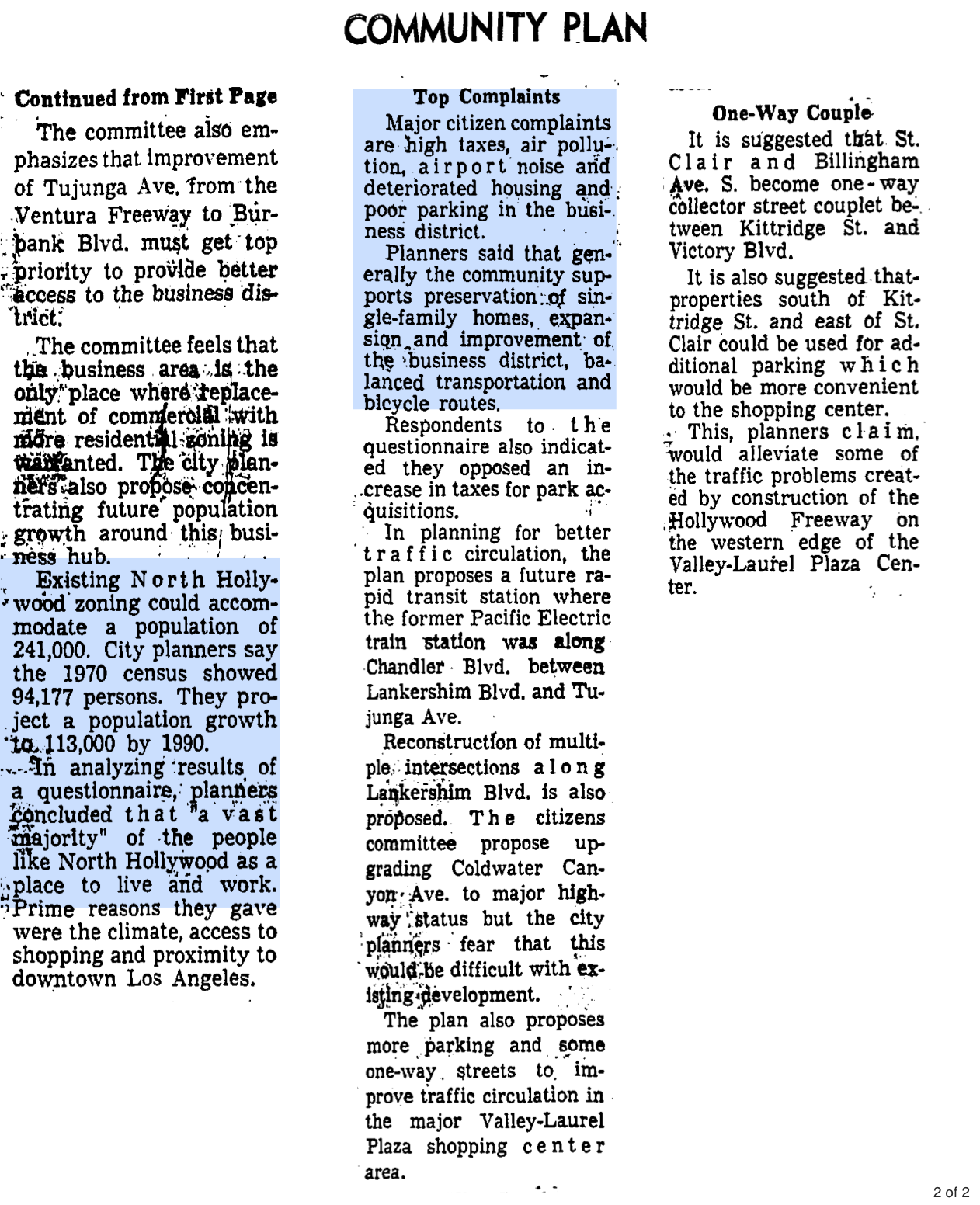
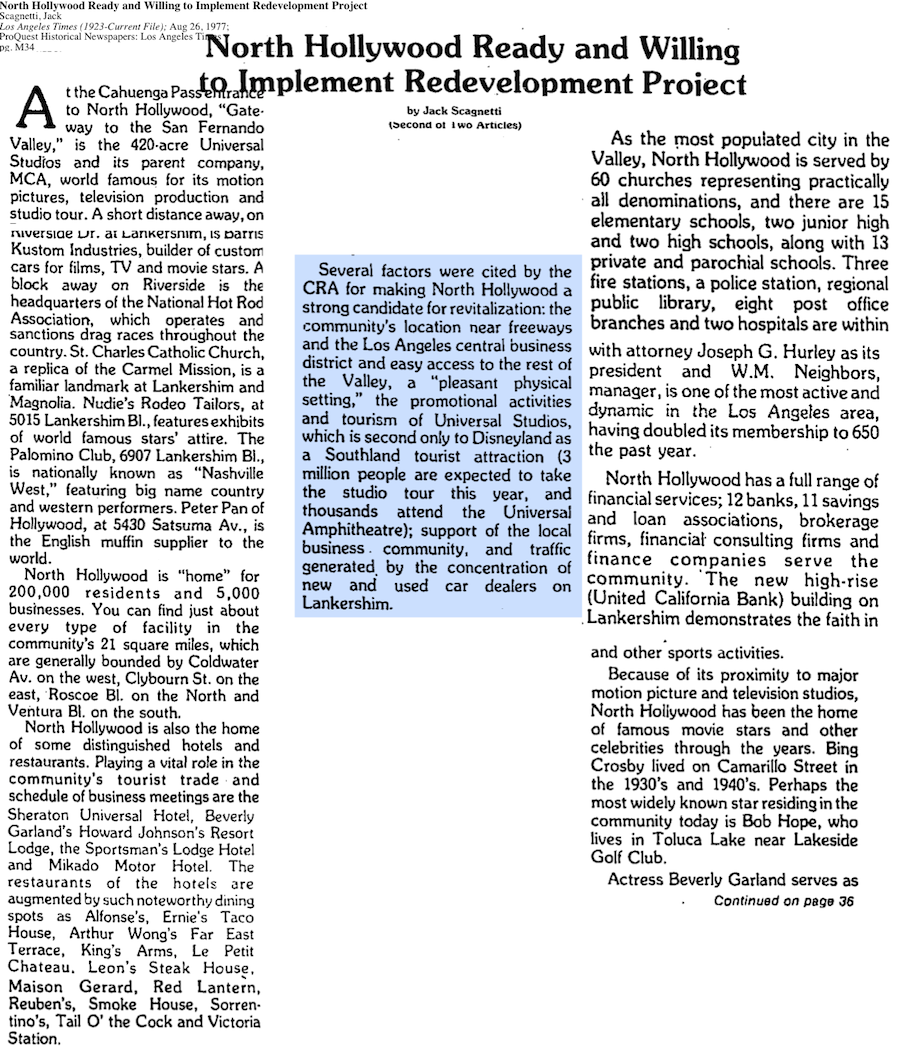
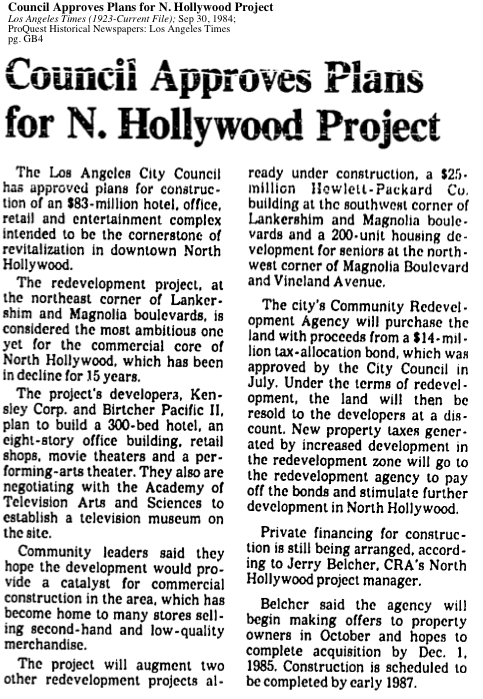
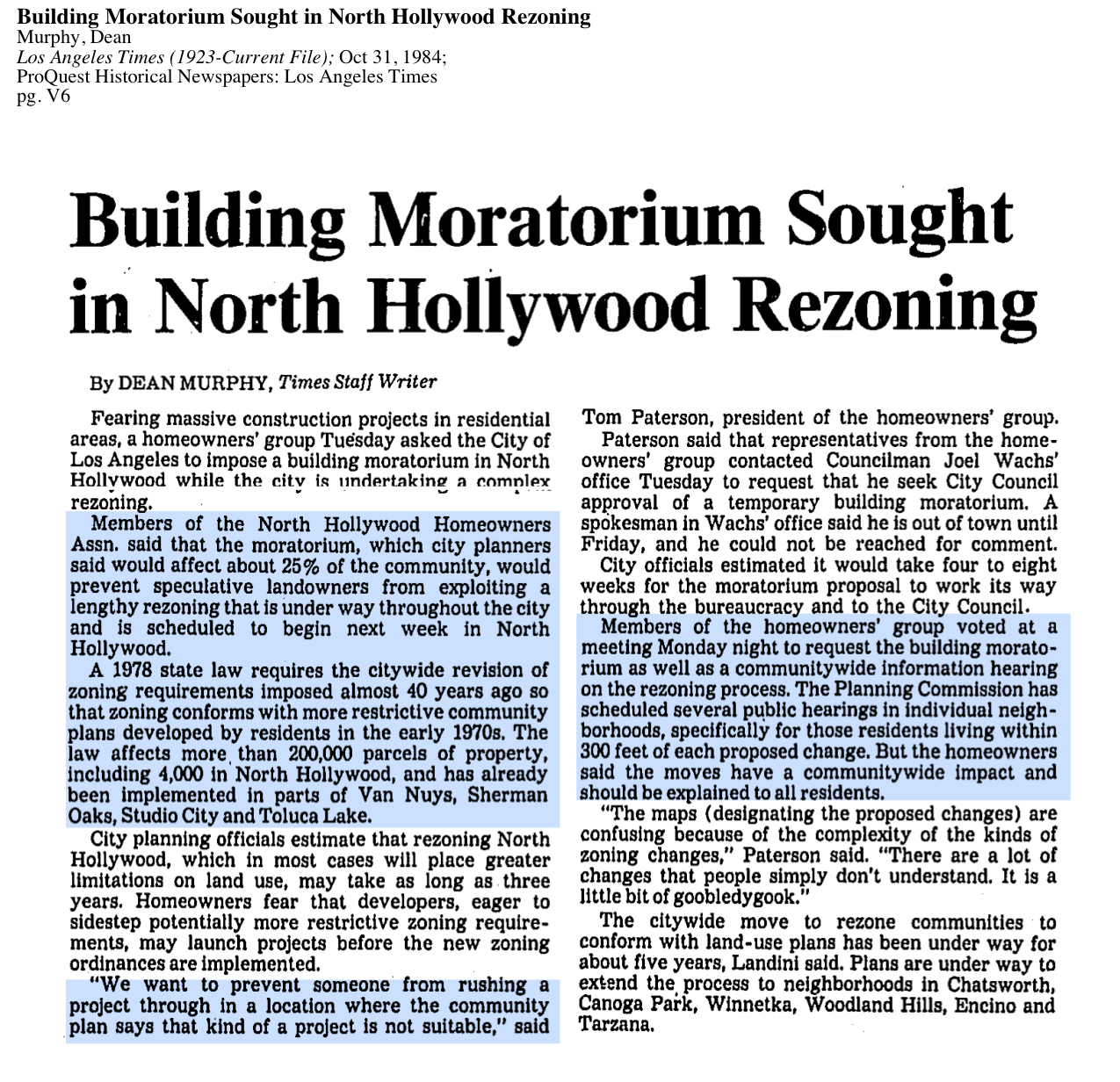
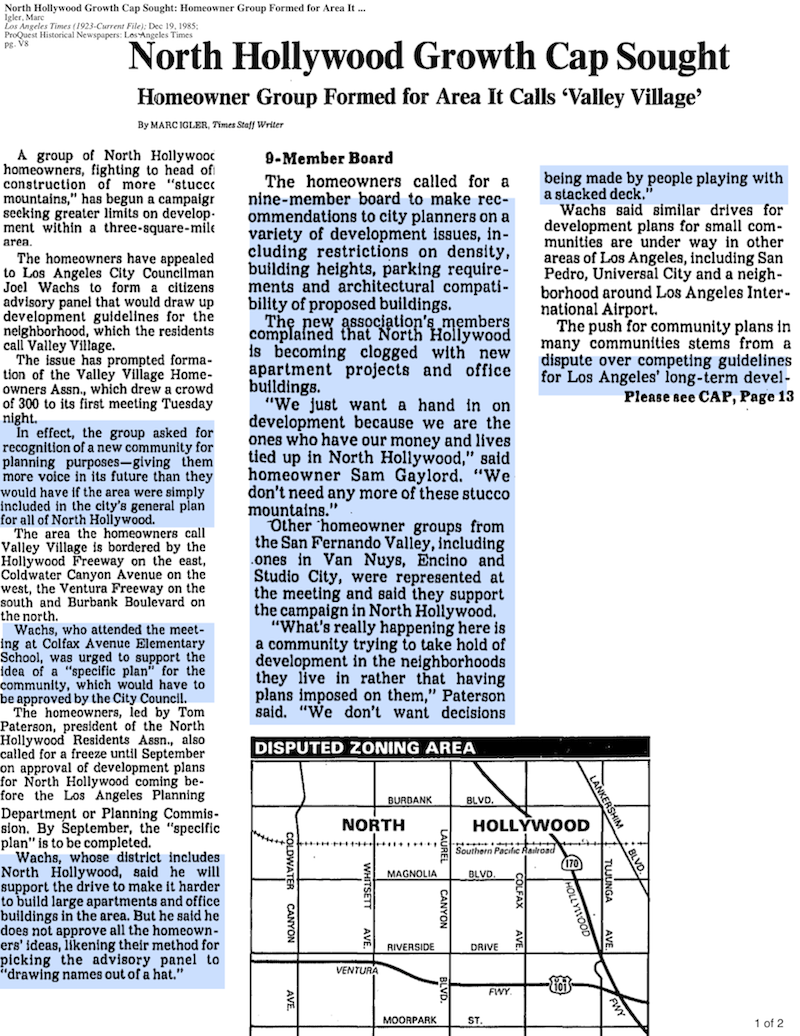
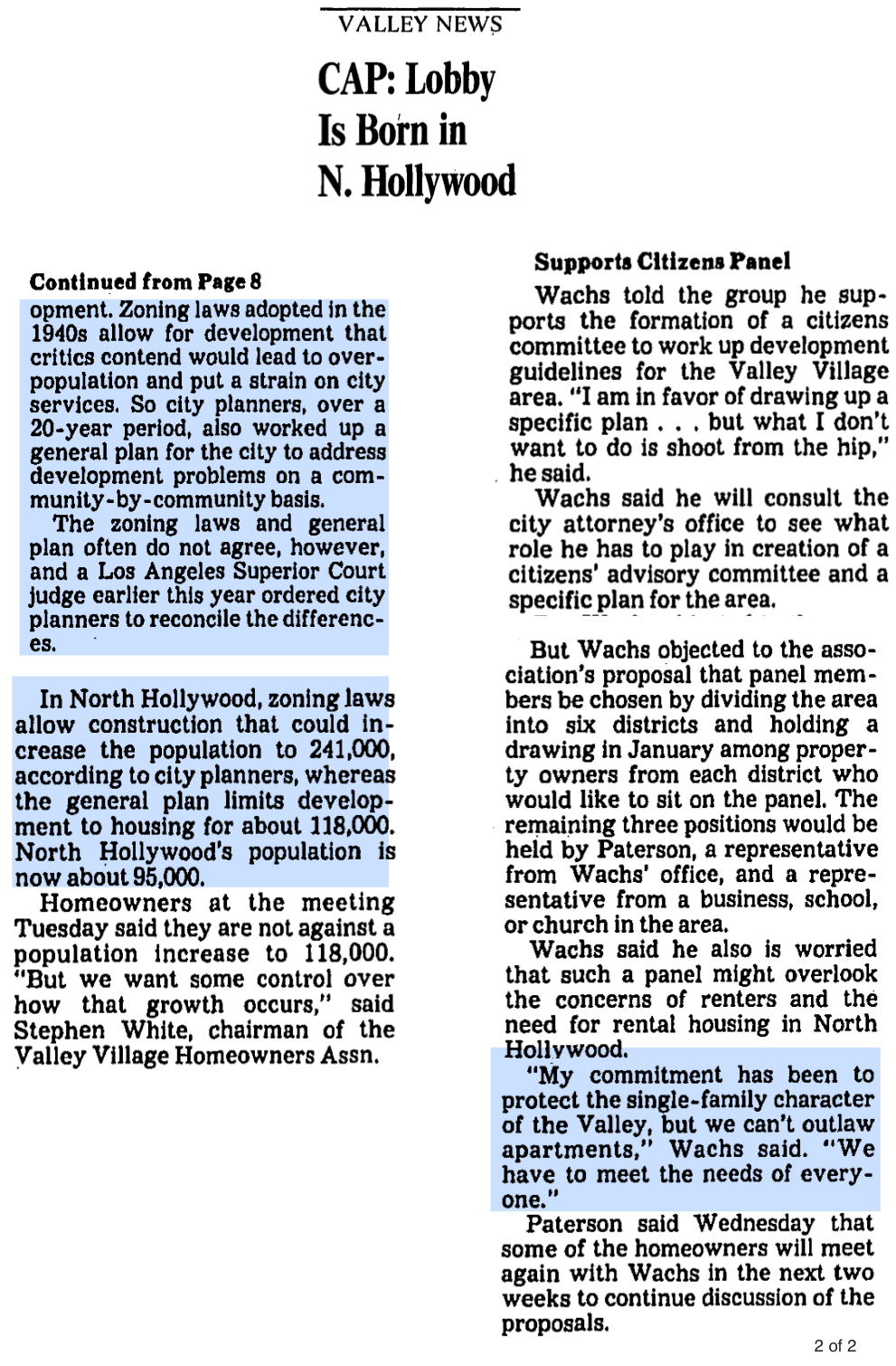
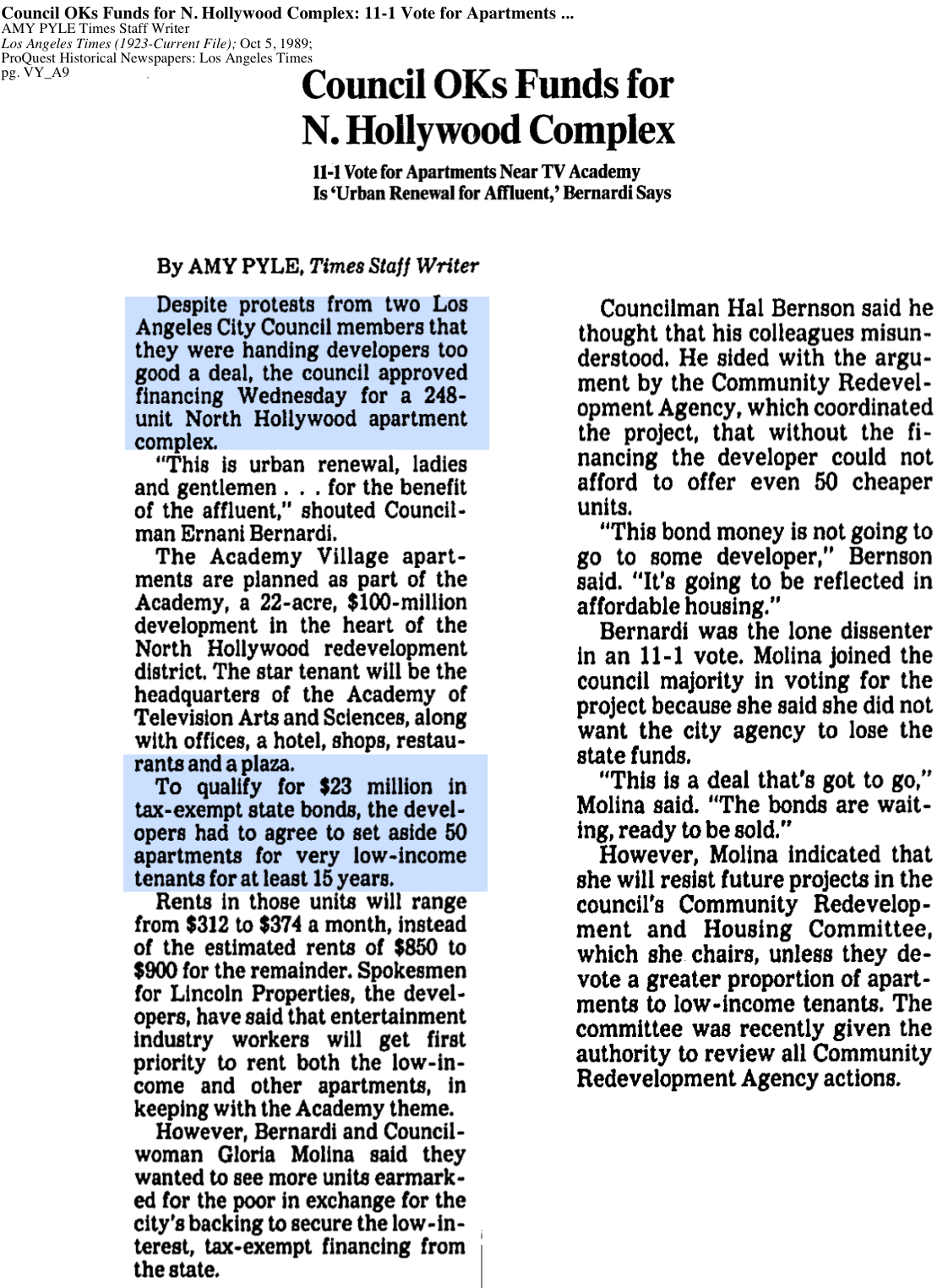
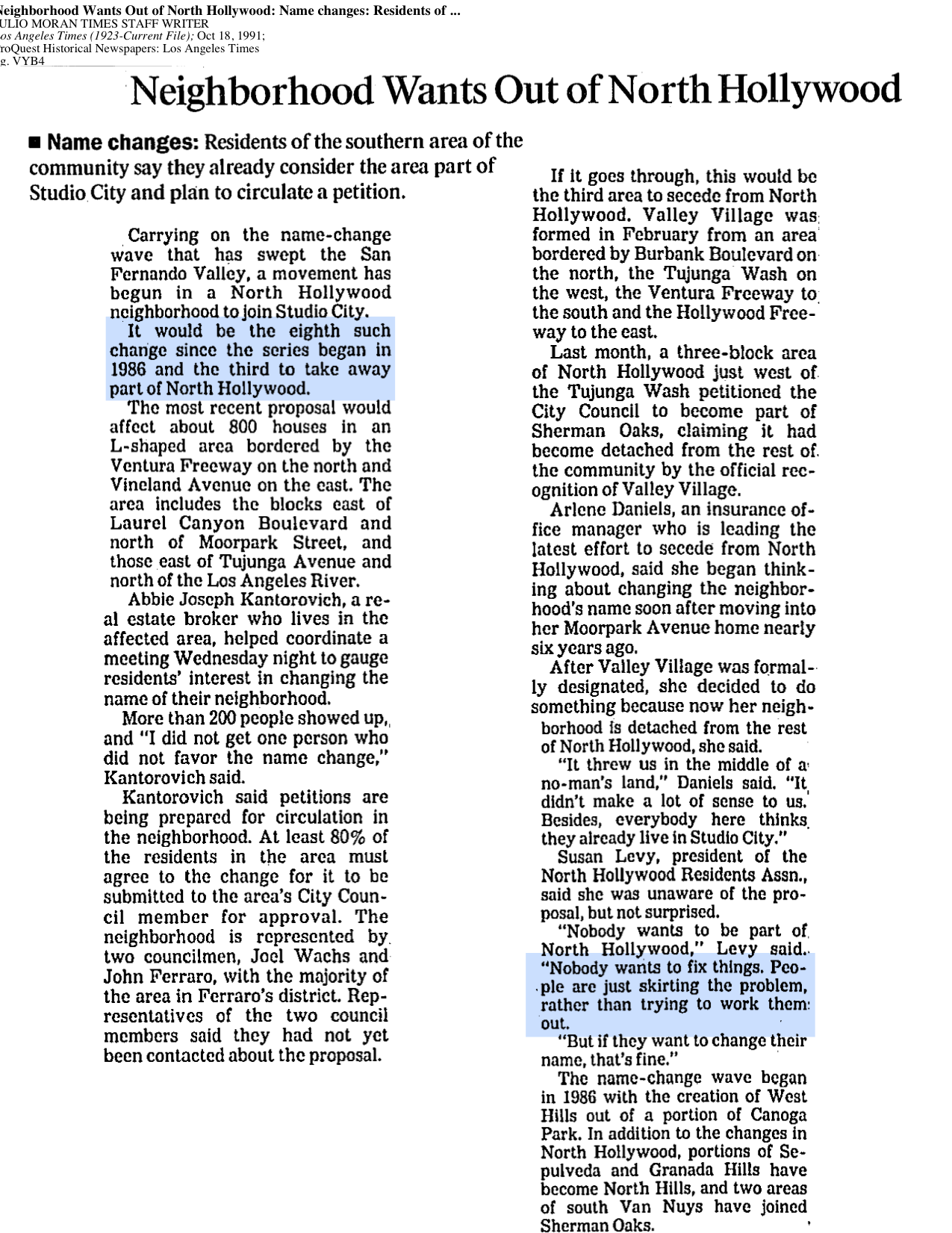
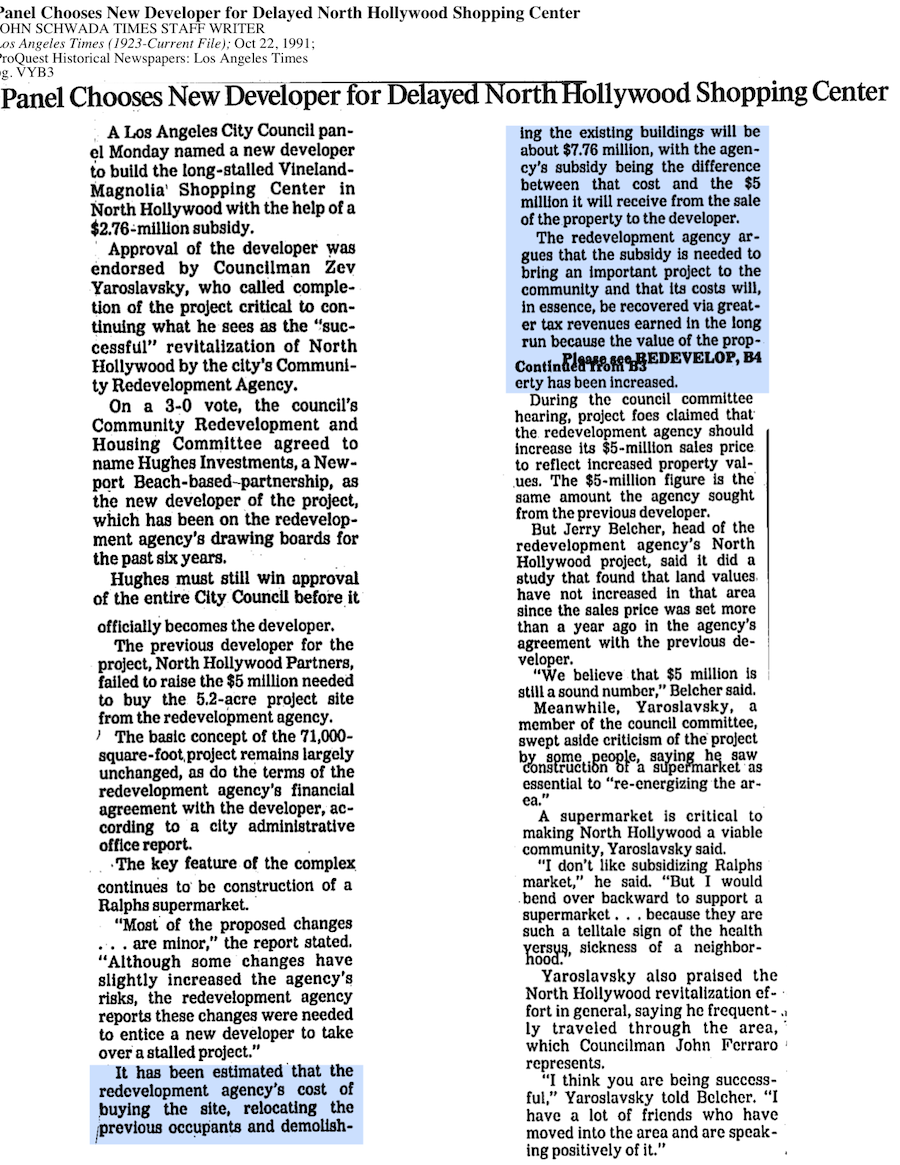
LA TIMES ARTICLES ABOUT NORTH HOLLYWOOD
______________________________________________________________________________________________________________________________________
______________________________________________________________________________________________________________________________________
______________________________________________________________________________________________________________________________________
______________________________________________________________________________________________________________________________________
______________________________________________________________________________________________________________________________________
______________________________________________________________________________________________________________________________________
______________________________________________________________________________________________________________________________________
______________________________________________________________________________________________________________________________________
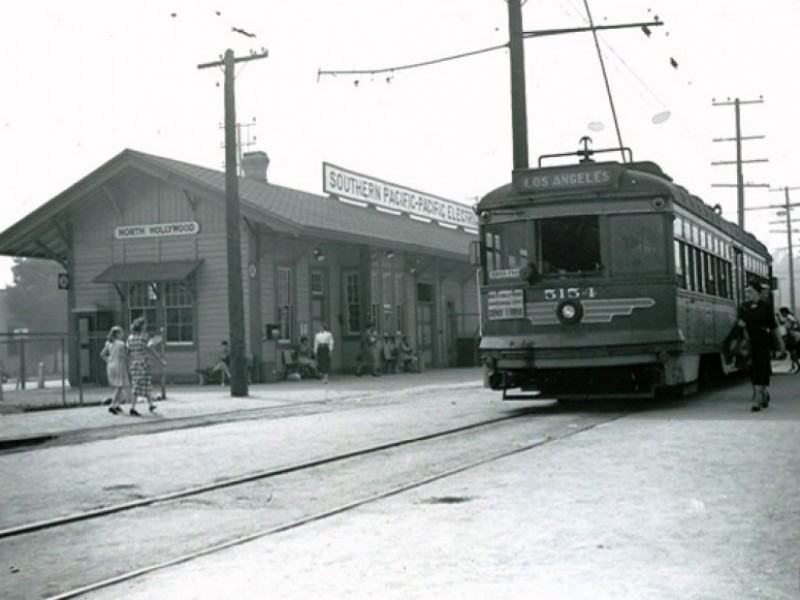
One of the oldest existing structures in the San Fernando
Valley, and has been named a cultural and historic monument by the
city of Los Angeles.
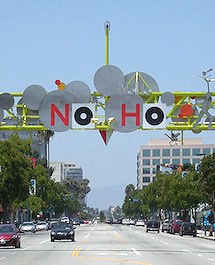
is home to more than twenty professional theaters, diverse art galleries, public art, professional dance studios, cafes, and shops. The district also features the largest concentration of music recording venues west of the Mississippi. Business and theater owners in the Universal City/North Hollywood Chamber of Commerce established the theater and arts district in 1992, and viola - NoHo Arts District is born.
This designation was intended to solidify the role the arts would play in the neighborhood’s economy. It also ensured support for artistic endeavors within North Hollywood would flourish rather than wane.
The NoHo Arts District, in conjunction with greater North Hollywood, is being transformed into a regional center, in large part as a result of the construction of Metro Stations for the two lines that have made the neighborhood into a regional hub for the San Fernando Valley. Medium- and high-density developments are being built around the Metro Station, making the Arts District a center of citywide development, with the intent of creating a walkable urban village. Goodbye Arts District ---- Hello gentrification.
So what does this mean for the future of the NoHo Arts District? North Hollywood is going through what small unique pockets of communities are experiencing. Valley Village, Studio City and sections of Sherman Oaks seem to be unfolding into Garcetti's dream of creating his own little New York. Only we aren't New York, aren't supposed to be New York and we have our own culture and history to be loyal to.
For a guy alleging to be born and raised in the San Fernando Valley, he sure doesn't act like the rest of us natives who value our history.
On that note - may we suggest power to the people. We can follow like lemmings or we can work together to reclaim what is left.
Copyright 2015